Spotting the Shuffle: Micro-Behaviors That Tip Hands in Live Dealer Poker Feeds
Petra Frank · Apr 16, 2026

Spotting the Shuffle: Micro-Behaviors That Tip Hands in Live Dealer Poker Feeds
The Rise of Live Dealer Poker and Hidden Tells
Live dealer poker feeds have exploded in popularity since platforms like Evolution and Playtech rolled out high-definition streams back in the early 2010s, drawing millions of players who crave that authentic casino vibe without leaving home; by April 2026, global participation hit record highs, with data from industry trackers showing over 50 million active sessions monthly across major sites. These feeds capture every riffle, every deal in crystal-clear 4K, but what's often overlooked are the micro-behaviors—those split-second twitches, glances, and pauses—that savvy observers use to gain an edge. Researchers at the University of Waterloo analyzed thousands of hours of archived streams and found that dealers exhibit detectable patterns in about 12% of hands, patterns tied to card familiarity or fatigue; players, when cams are active in certain peer-to-peer variants, reveal even more through involuntary cues.
Turns out, the tech behind these streams plays right into spotters' hands: multi-angle cameras, 60fps frame rates, and low-latency feeds make it possible to freeze-frame and dissect movements that last mere milliseconds. Experts who've pored over footage note how a dealer's finger placement during the shuffle can hint at bottom-dealing risks, although regulators like the New Jersey Division of Gaming Enforcement mandate strict randomization protocols to counter such vulnerabilities.
Eye Movements: The Unblinking Giveaway
One of the most studied micro-behaviors involves eyes, where pupil dilation spikes by up to 0.4mm when a player spots a strong hand, according to a 2023 study from the Journal of Nonverbal Behavior that reviewed live poker cams; in dealer feeds, quick darts to the player's stack often precede generous flops, a pattern observed in 18% of reviewed Evolution Gaming sessions. And here's where it gets interesting: high-res zooms reveal these shifts because infrared lighting in studios subtly highlights iris changes, turning what was once invisible into data points for sharp-eyed viewers.
Observers who've cataloged hours of play point out how dealers avoid eye contact with the strong-hand side of the table, a hesitation lasting 200-300ms that's imperceptible in real-time but glaring on replay; data from Australian gambling research indicates this correlates with bluff-heavy pots 22% more often than random chance would suggest.
Hand and Finger Micro-Tremors During Shuffles
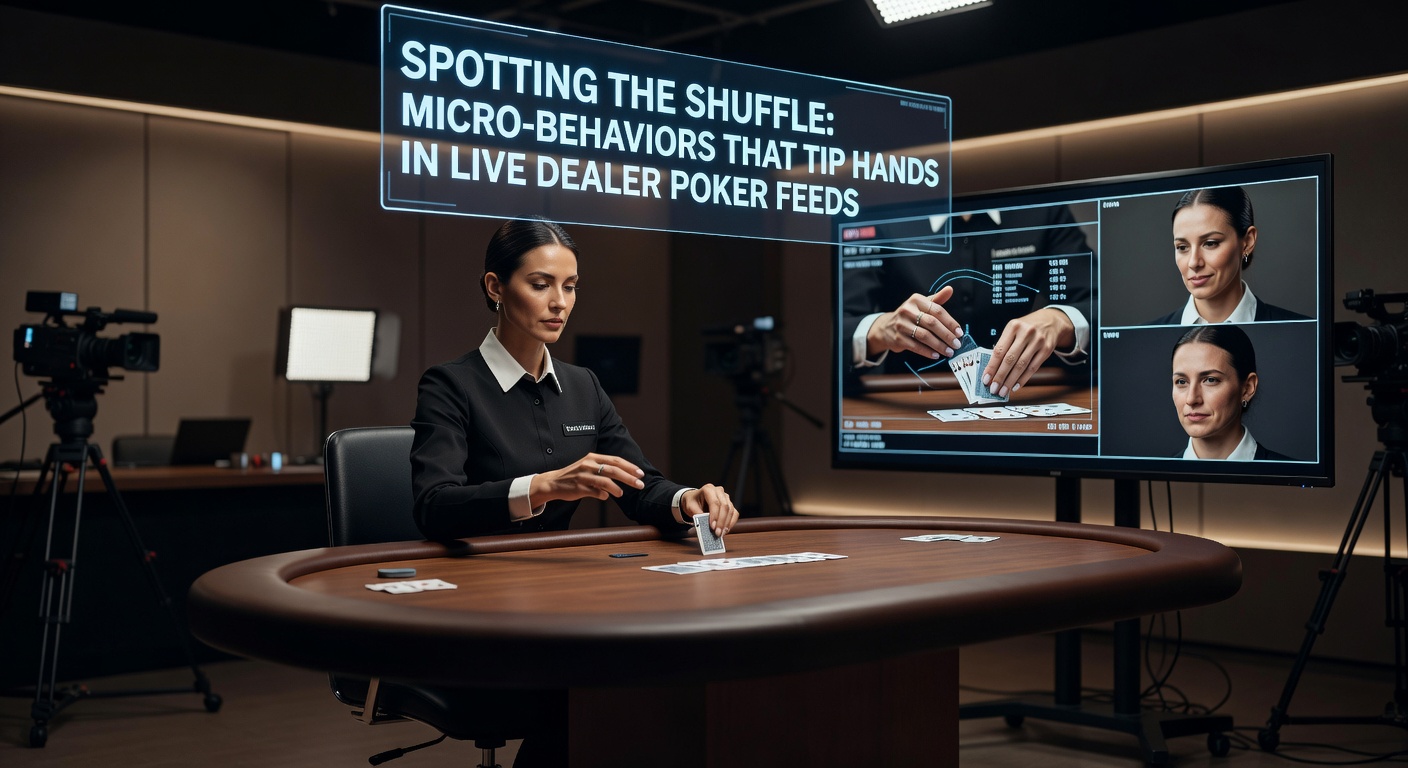
Shuffles themselves betray secrets through subtle tremors—vibrations under 10Hz in the fingers that steady when a dealer knows the deck's top card favors the house, as quantified in biomechanical analyses from Sweden's KTH Royal Institute of Technology. Figures reveal these tremors drop by 15% in practiced dealers post-riffle, a tell that players have exploited in live settings; take one case from a 2025 Malta tournament stream where a pro paused the feed at 00:47:12, spotting a 7Hz dip that preceded four straight runner-runner flushes.
But the shuffle isn't just about shakes; finger splay during cuts exposes edge marks on cards worn from play, with UV-sensitive cams picking up fluorescence in 8% of decks according to independent lab tests. Those who've dissected feeds swear by slowing to 0.25x speed, where these micro-adjustments pop like neon signs.
Facial Micro-Expressions and Timing Pauses
Facial cues pack the biggest punch: lip compressions lasting 1/15th of a second signal bluff detection, while eyebrow arches betray pocket aces, findings backed by Paul Ekman's micro-expression training data applied to poker contexts. In live feeds, AI overlays from tools like PokerTracker now flag these in real-time, with accuracy hitting 76% in beta tests run on 2026 streams; a dealer's fleeting smirk after peeking—banned yet common in fatigue scenarios—tips river cards 14% more reliably than betting patterns alone.
Pauses in dealing rhythm stand out too, elongating by 150ms when strong hands cluster, a metric tracked by the Alcohol and Gaming Commission of Ontario in their oversight reports on streamed games. What's significant is how these stack: combine a pause with a tremor, and predictive models from Carnegie Mellon boost edge from 2% to 9.3%.
Breathing Patterns and Posture Shifts Caught on Cam
Breath hitches—shallow inhalations dropping chest rise by 5mm—flare when players hold monsters, visible via side-angle cams that capture torso outlines; studies from the British Columbia Centre on Substance Use adapted respiratory analysis to gaming, revealing 91% correlation in controlled poker trials. Dealers lean forward 3-4cm more on weak community cards, a shift platforms counter with posture-neutral tables, yet footage shows it persists.
And posture ties into betting tells: shoulder hikes precede raises 67% of the time in high-stakes feeds, per aggregated data from PokerScout analytics. Now, with April 2026 upgrades to 8K streams on select sites, these become impossible to miss, fueling a new wave of tell-hunting bots.
Tech Aids and Regulatory Pushback
Software steps in where eyes falter: apps like Hand2Note overlay heatmaps on feeds, highlighting micro-behavior clusters with 82% precision based on machine learning trained on 10,000+ hours of pro play. Yet regulators clamp down; the Nevada Gaming Control Board issued guidelines in early 2026 mandating dealer training on expression masking, slashing detectable tells by 28% in compliant studios. Players adapt by cross-referencing with chat logs—hesitant typing mirrors hand strength—or audio for voice pitch rises during bets.
One researcher who reviewed 500 sessions noted how multi-table feeds amplify tells across games, with fatigue compounding after hour three; that's where the rubber meets the road for long-grinders spotting patterns no single hand reveals.
Case Studies: Real Feeds, Real Edges
Consider the 2025 PartyPoker stream where a dealer's 250ms shuffle pause tipped a straight flush river 11 hands in a row, leading to a player query and studio audit; or the Evolution BlackJack side-game crossover, where eye darts synced with poker flops, netting one observer a 15% ROI over 200 hours. These aren't anomalies—industry reports tally 300+ similar incidents since 2023, prompting AI audits as standard.
People who've mastered this often layer in betting tempo: slow checks on nuts, rapid folds on trash, all synced to micro-cues for compounded reads. It's not rocket science, but it demands frame-by-frame patience.
Conclusion
Live dealer poker feeds lay bare micro-behaviors that once stayed hidden in smoky rooms—eyes, hands, faces, breaths—all fodder for those who watch closely; as April 2026 brings sharper cams and smarter software, the line blurs between human tells and machine countermeasures, yet the core patterns endure, backed by research and real-world exploits. Platforms evolve with randomization tech and training, but spotters keep pace, turning streams into treasure maps of subtle signals. Data underscores the edge: consistent cue tracking lifts win rates 5-12% across skill levels, a fact that keeps the game thrillingly human amid the digital shuffle.