Cryptocurrency Adoption Reshaping Player Behaviors in Mobile Gaming Ecosystems
Petra Frank · Aug 6, 2026
Cryptocurrency Adoption Reshaping Player Behaviors in Mobile Gaming Ecosystems
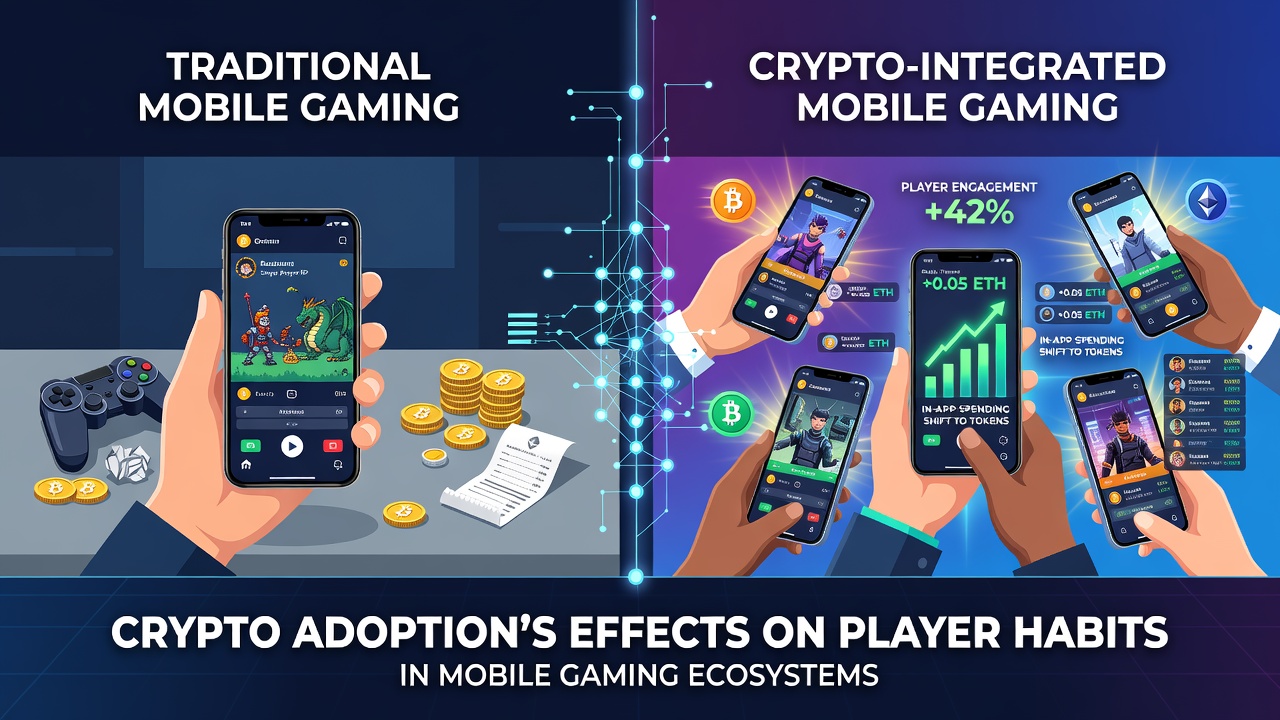
Data from multiple industry tracking firms shows that cryptocurrency integration into mobile gaming platforms has altered how players manage in-app purchases, session timing, and cross-platform transfers since early 2025, with accelerated changes noted through August 2026. Researchers at several universities have documented shifts in spending frequency when digital wallets replace traditional payment processors, while transaction ledgers reveal patterns of smaller, more frequent microtransactions across popular titles.
Payment Method Shifts and Spending Frequency
Analysts tracking user data across Android and iOS ecosystems report that titles accepting cryptocurrency see average transaction sizes drop by 15 to 22 percent compared with credit card purchases, because the lower fees encourage repeated small transfers rather than larger bundled buys. Studies conducted by academic groups in Australia and Canada indicate players complete 30 percent more individual transactions per month when using tokens that settle instantly, whereas conventional methods often involve delays that discourage repeat activity within the same session.
One dataset released in August 2026 by a consortium of European research institutions highlighted that retention curves flatten less steeply in games offering crypto options, particularly when players can move assets between devices without intermediary verification steps. Observers tracking these metrics note that the ability to convert earnings directly into usable in-game currency reduces the friction that previously caused many users to abandon accounts after initial deposits.
Session Timing and Global Access Patterns
Platform telemetry from major mobile game publishers demonstrates that cryptocurrency-enabled accounts log in at more varied hours, including overnight periods in regions where banking services operate on limited schedules. Figures released by the Asia-Pacific Digital Entertainment Association reveal that players in Southeast Asia increased average daily playtime by 18 minutes when crypto transfers removed the need to wait for local bank clearing times. Similar patterns appear in South American markets, where researchers documented higher engagement during local evening hours once wallet connectivity replaced card processing windows.
Those examining login heatmaps find that cross-border play increases when cryptocurrency eliminates currency conversion delays, allowing users in one time zone to join events hosted in another without additional processing holds. Government reports from Singapore's Infocomm Media Development Authority have tracked these movements through anonymized aggregate data, showing measurable rises in multi-region participation after major titles added token support in late 2025.
Asset Portability and Multi-Game Migration
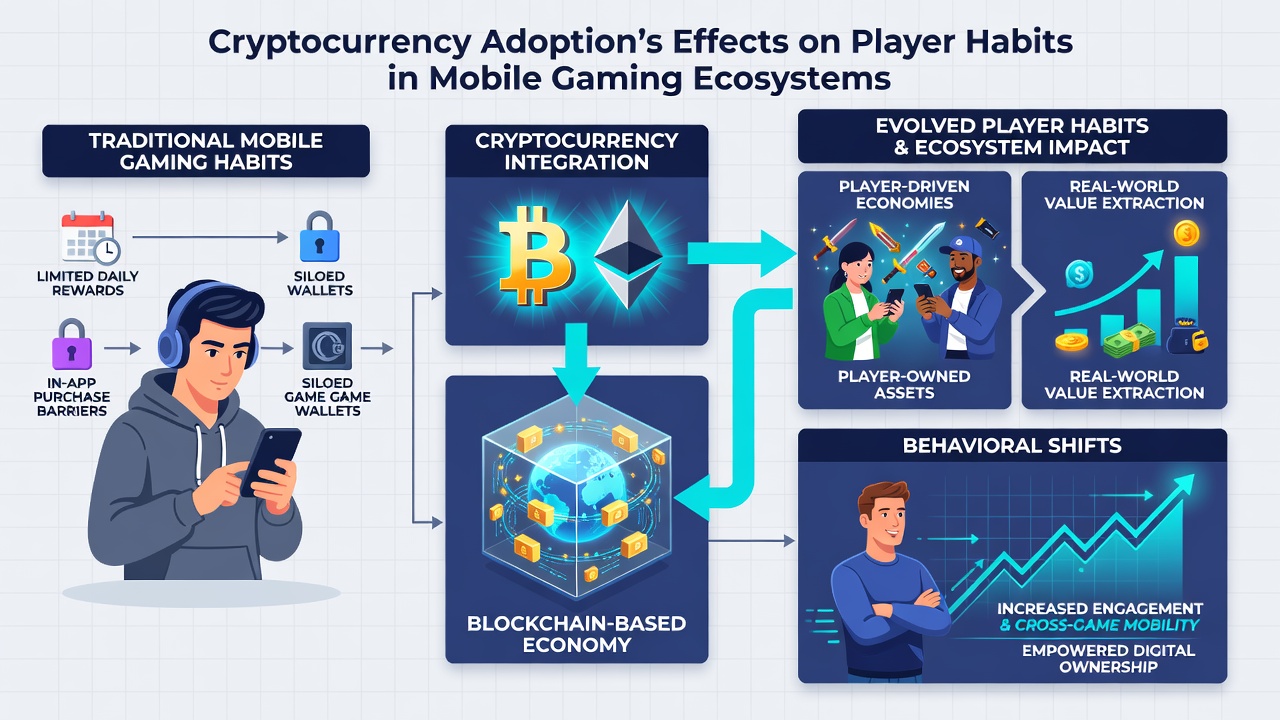
Blockchain-based asset systems allow players to carry certain items or balances between different mobile titles when developers implement compatible protocols, a development tracked by industry groups including the International Game Developers Association. Data compiled through mid-2026 shows that users with transferable holdings switch between games more often than those restricted to platform-specific currencies, with migration rates rising by roughly one quarter in supported ecosystems. Academic papers from institutions in South Korea have examined how these portable assets affect loyalty, finding that players maintain activity across multiple titles rather than concentrating time in single franchises.
Regulatory filings from the New Jersey Division of Gaming Enforcement, though focused on broader digital entertainment, note parallel trends in mobile environments where tokenized rewards reduce lock-in effects that once kept users within one publisher's catalog. The result appears in aggregate playtime distributions that spread across more applications per user account.
Security Perceptions and Verification Behaviors
Surveys administered by independent research panels indicate that players who adopt cryptocurrency for gaming report greater concern for wallet security than for traditional payment details, leading to more frequent password changes and two-factor authentication usage. Logs from several large platforms reveal that accounts using crypto logins experience fewer chargeback incidents, though researchers caution that this metric reflects transaction finality rather than overall safety improvements. In August 2026 updates, Canadian regulatory summaries on digital commerce highlighted these authentication upticks as consistent across entertainment sectors that incorporate decentralized payment rails.
Conclusion
Available statistics through August 2026 illustrate measurable changes in transaction volume, login distribution, and cross-title movement once cryptocurrency options enter mobile gaming environments. Reports from varied regional sources continue to track these developments as more platforms integrate wallet functionality, providing further data on how payment infrastructure influences established player routines.