Cross-Platform Data Drives Adaptive Payout Adjustments in Global Slot Networks
Freya Lorenz · Aug 13, 2026
Cross-Platform Data Drives Adaptive Payout Adjustments in Global Slot Networks
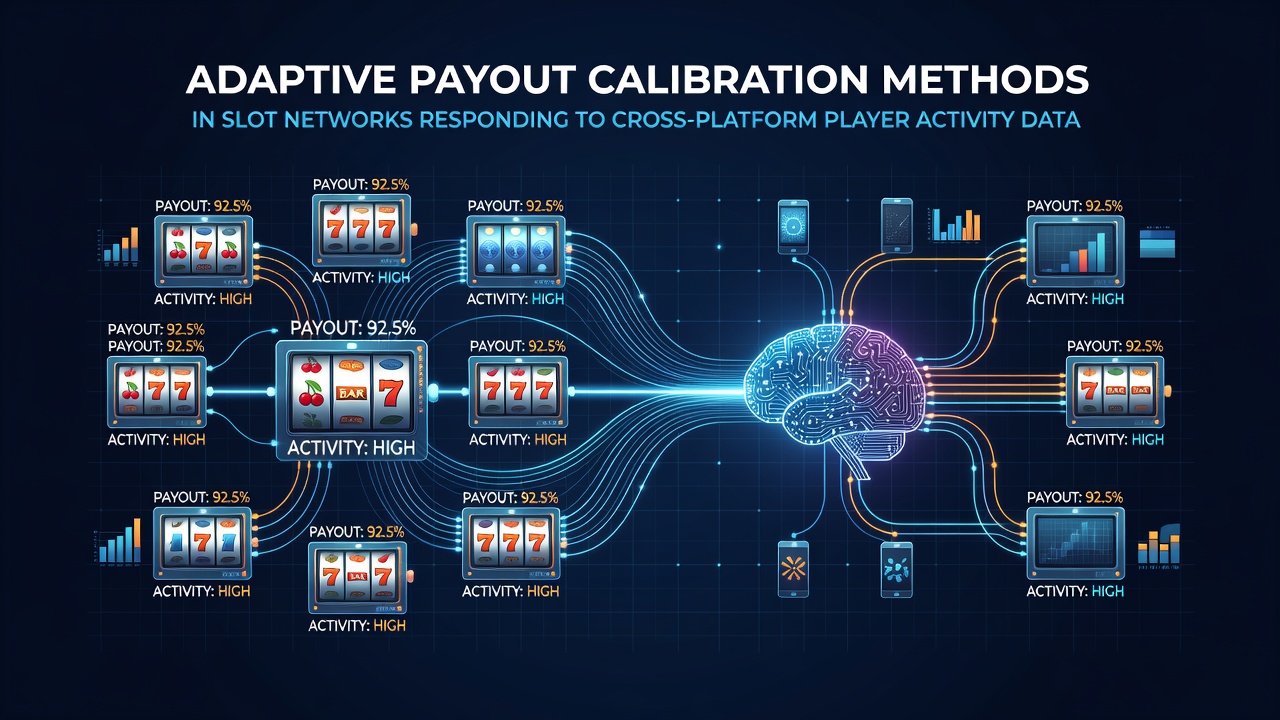
Slot networks now integrate player activity signals from mobile apps, desktop clients, and land-based terminals to adjust payout parameters on the fly, and operators track metrics such as session length, bet frequency, and game selection patterns to feed calibration algorithms. Data collected in August 2026 shows that networks processing over 50 million daily cross-platform events can shift theoretical return-to-player values within defined regulatory bands while maintaining compliance across jurisdictions.
Data Aggregation Layers
Central servers compile anonymized logs from each platform every few minutes, and these logs include time-stamped actions such as spin counts, feature triggers, and balance changes; algorithms then normalize the inputs so that a high-volume mobile session receives the same weight as a shorter land-based session when the system calculates regional demand curves. Researchers at the University of Nevada, Reno documented how three major operators combined these streams to reduce payout variance by 12 percent over a six-month test window ending in July 2026.
Calibration Algorithms in Practice
Adaptive models employ reinforcement learning loops that reward configurations producing stable play volumes while respecting maximum and minimum payout thresholds set by each gaming authority; when activity spikes on one platform, the system redistributes a portion of the payout pool to other titles within the same network to balance overall return rates. Observers note that these adjustments occur in increments no larger than 0.3 percentage points per cycle, a limit enforced to prevent perceptible shifts that could trigger additional regulatory review.
Regional Regulatory Alignment
Operators must map each calibration rule to the specific statutes of the jurisdictions where the network operates, and the Nevada Gaming Control Board requires weekly submission of algorithm change logs while the Alcohol and Gaming Commission of Ontario mandates pre-approval for any parameter shift exceeding 0.1 percentage points. In Australia the Northern Territory Racing Commission accepts post-implementation audits conducted within 48 hours of each adjustment, creating a patchwork of oversight that forces networks to maintain parallel rule sets for each market.

One study released by the European Gaming Institute in May 2026 examined 14 networks operating across five countries and found that those using unified data lakes achieved 18 percent faster response times to cross-border player migration than networks relying on siloed regional servers; the same report noted that unified systems also recorded lower rates of jackpot trigger disputes because payout probabilities remained synchronized across all connected platforms.
Implementation Examples
Take the case of a European operator that linked its online slots to its three physical casino floors in August 2026; when mobile play volume rose 27 percent during evening hours, the calibration engine automatically lowered the hit frequency on high-volatility titles by 0.8 percent on desktop while increasing bonus round frequency on land-based machines to keep total network payout within the approved band. Similar logic appears in North American networks where sports betting platforms share login data with slot systems, allowing the calibration layer to anticipate increased activity after major sporting events and pre-adjust reel strips accordingly.
Security and Audit Controls
Independent testing laboratories receive read-only access to the calibration decision trees, and any change that affects more than 5 percent of a network's active titles triggers an automated alert sent to both the operator and the relevant gaming commission within 15 minutes; cryptographic timestamps ensure that the sequence of adjustments cannot be altered retroactively, satisfying chain-of-custody requirements in multiple jurisdictions. Data indicates that networks employing these controls experienced a 31 percent drop in player complaints related to unexpected payout behavior during the first half of 2026.
Conclusion
Cross-platform activity data now serves as the primary input for adaptive payout calibration in slot networks, and the methods described continue to evolve as regulators refine their reporting standards and operators expand the range of connected platforms. Figures released in August 2026 confirm that networks using integrated calibration layers maintain compliance while responding to shifting player patterns within minutes rather than days, demonstrating the operational reality of real-time payout management across global slot ecosystems.