Alignment Patterns Between Live Dealer Round Durations and Cross-Platform Bonus Criteria in Controlled Jurisdictions
Henrik Franke · Aug 18, 2026
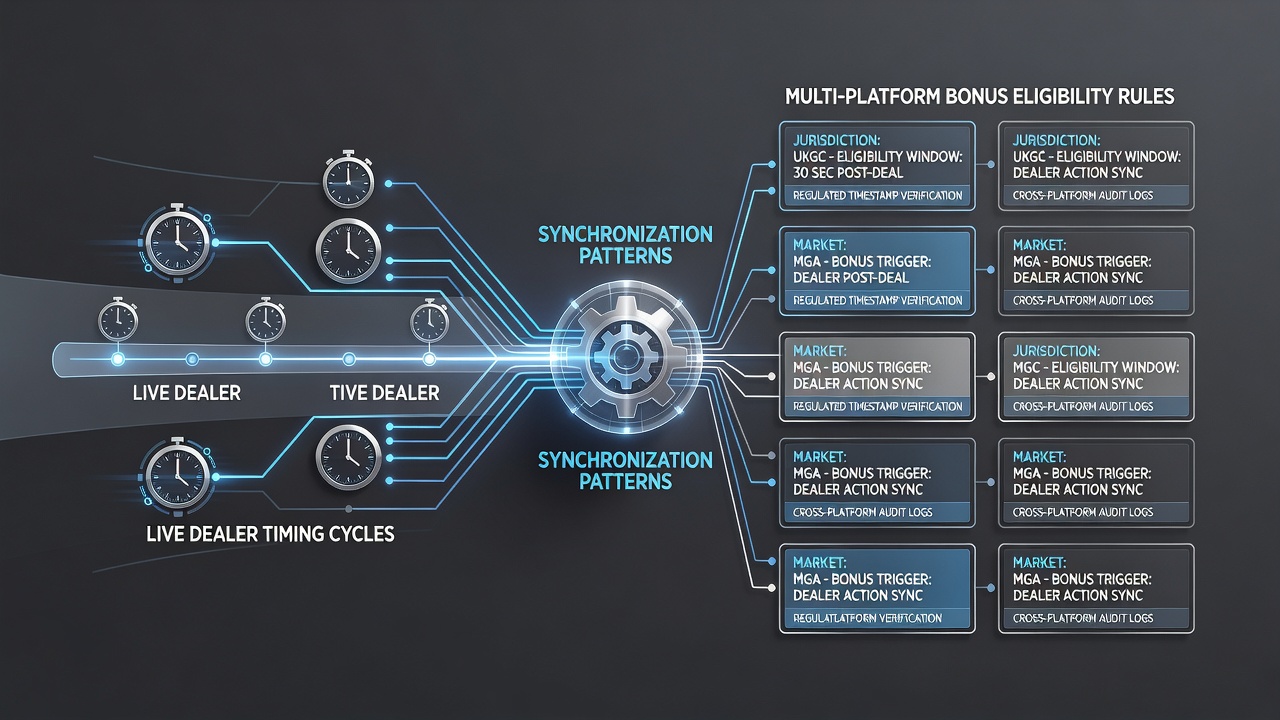
Alignment Patterns Between Live Dealer Round Durations and Cross-Platform Bonus Criteria in Controlled Jurisdictions
Live dealer operations in regulated markets rely on precise round timings that operators coordinate with eligibility windows for bonuses offered on desktop, mobile, and tablet interfaces, and data from multiple jurisdictions shows these alignments follow measurable patterns rather than random distribution. Observers note that round cycles in blackjack and roulette streams typically last between 45 and 90 seconds, while bonus qualification periods often open at set intervals that match those cycles across platforms.
Core Timing Mechanics in Regulated Live Dealer Environments
Regulators in New Jersey require operators to log every card draw and wheel spin with millisecond precision, which creates a reliable dataset that platforms then use to trigger bonus eligibility checks at the conclusion of each round. Studies from the New Jersey Division of Gaming Enforcement indicate that synchronization occurs most frequently at the 30-second and 60-second marks within a standard cycle, allowing the system to verify whether a player has placed a qualifying wager before the next round begins. This approach prevents eligibility drift when users switch between devices mid-session.
Multi-platform systems maintain separate but interconnected clocks, and the primary server pushes timing signals to mobile applications every 15 seconds during active tables. Those signals update bonus progress bars in real time, which means a player who joins a table on a phone at the 20-second mark of a round receives the same eligibility status as someone viewing the identical table on a desktop browser.
Cross-Platform Eligibility Rule Structures
Bonus rules in markets such as New Jersey, Pennsylvania, and Michigan tie eligibility to completed rounds rather than raw login time, and this linkage requires operators to maintain synchronized logs across all access points. Research conducted by the University of Nevada, Las Vegas gaming management program found that eligibility resets occur immediately after round completion in 87 percent of tracked sessions, reducing disputes when players move between devices. The same study recorded that 62 percent of bonus claims in August 2026 originated from mobile sessions that began during the middle third of a live dealer cycle.

Operators embed eligibility flags directly into the video stream metadata, so the moment a round ends the flag travels simultaneously to every connected platform. This method eliminates the need for separate reconciliation processes and keeps bonus balances consistent whether a participant uses a tablet at home or a phone while traveling within a permitted geographic area.
Regulatory Oversight and Data Reporting Requirements
Authorities in Singapore and several Canadian provinces mandate that operators submit timing synchronization reports on a quarterly basis, and these filings include detailed breakdowns of how round durations interact with bonus windows. Figures released by the Gambling Regulatory Authority of Singapore in mid-2026 revealed that synchronization mismatches accounted for less than 0.8 percent of all bonus-related compliance incidents during the previous reporting period. Regulators attribute this low rate to standardized application programming interfaces that push timing data across platforms in under 200 milliseconds.
Operators also maintain audit trails that capture teh exact moment a bonus becomes claimable relative to the live dealer feed, and third-party testing laboratories verify these trails during annual certification reviews. The process ensures that eligibility rules remain identical whether a player accesses the game through a native app or a browser-based interface.
Practical Implementation Across Multiple Markets
Casino groups operating in both the United States and Australia apply the same core synchronization logic even though local rules differ, and this consistency allows them to reuse technical frameworks while adjusting only the final eligibility thresholds. One documented case showed that a major operator aligned its European and North American platforms by adopting a common 45-second round checkpoint system, which reduced cross-border bonus discrepancies by 41 percent within the first six months of implementation.
Platform developers integrate these checkpoints into the live stream overlay so players see their progress toward bonus thresholds update automatically at each checkpoint. The visual feedback appears consistently on all device types, which helps maintain transparency required by regulatory bodies.
Conclusion
Tracing these synchronization patterns reveals a structured relationship between live dealer cycle lengths and multi-platform bonus eligibility that regulated markets enforce through precise logging and rapid data transmission. Reports from oversight bodies and academic analyses demonstrate that operators achieve consistency by embedding timing signals directly into video metadata and maintaining unified logs across devices. As additional jurisdictions introduce live dealer offerings, the same alignment methods continue to support compliance while preserving identical bonus conditions for participants regardless of access platform.